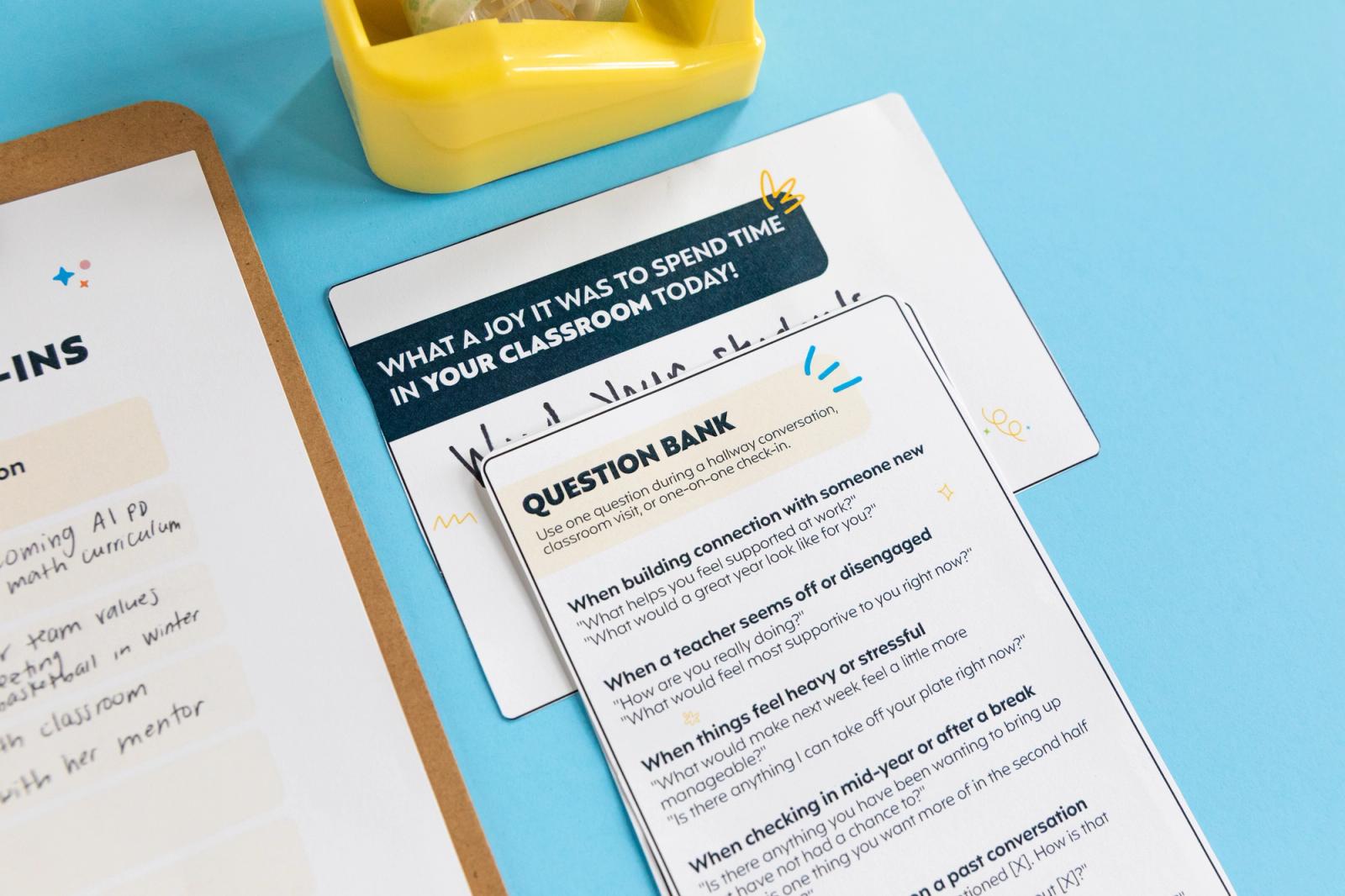
Quick Check-In, Real Connection
Ready-to-use one-on-one check-in questions for every moment of the school year.
5 min
Seven simple ways to write a newsletter your staff will actually read.
A practical guide to help school leaders build a weekly staff newsletter that keeps everyone informed and connected. With seven easy-to-follow tips, you can create a consistent communication habit that saves time, reduces confusion, and helps your team feel seen.
Why try it
When staff know what to expect and when to expect it, the whole school runs more smoothly. A well-crafted weekly newsletter keeps your team aligned, reduces the number of last-minute questions, and gives you a regular touchpoint to celebrate wins and share what matters. It also signals that you respect their time, which goes a long way for morale and trust.
Browse the printables included with this resource.
Things you'll need
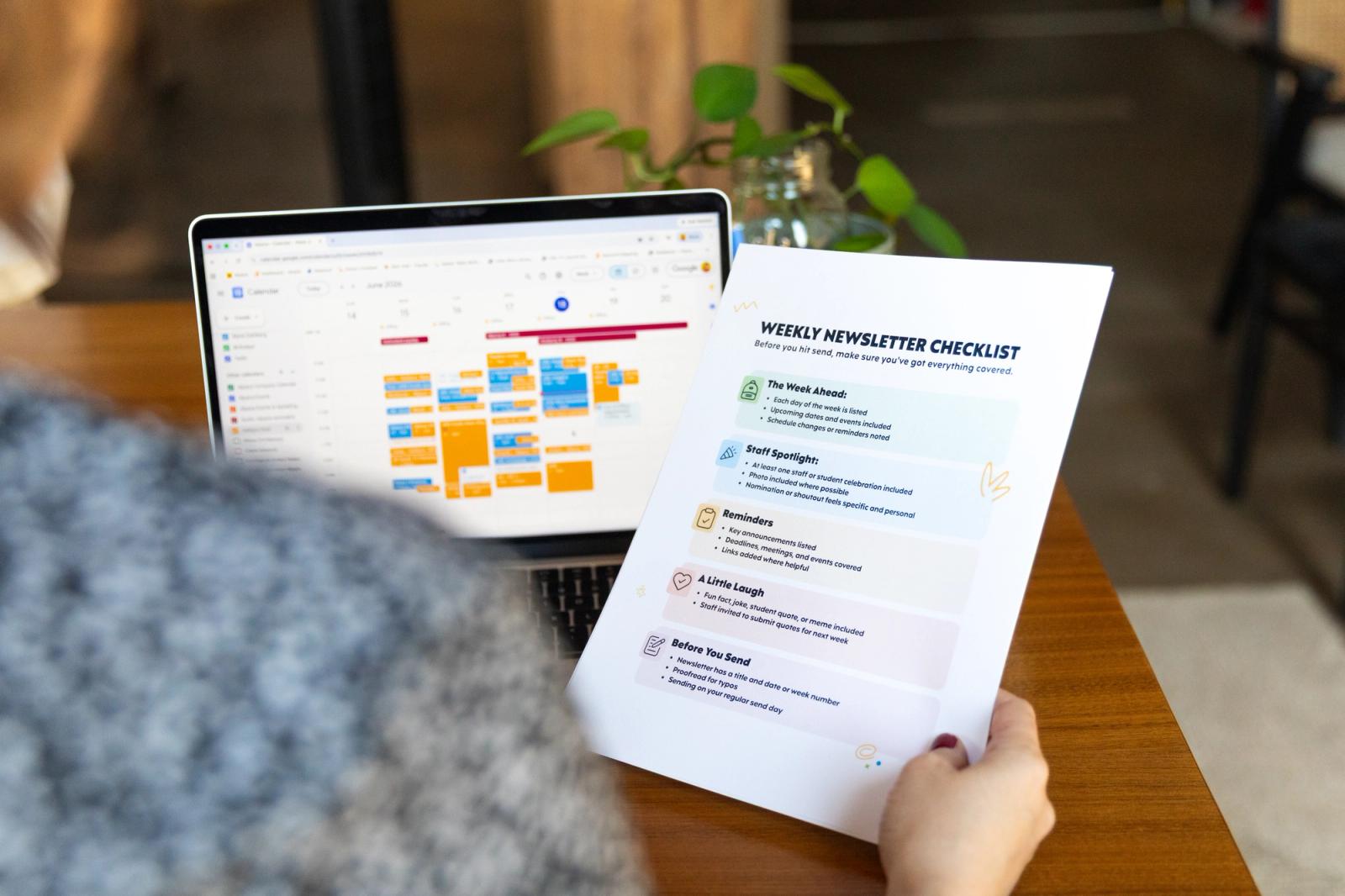
Instructions
Give it a name
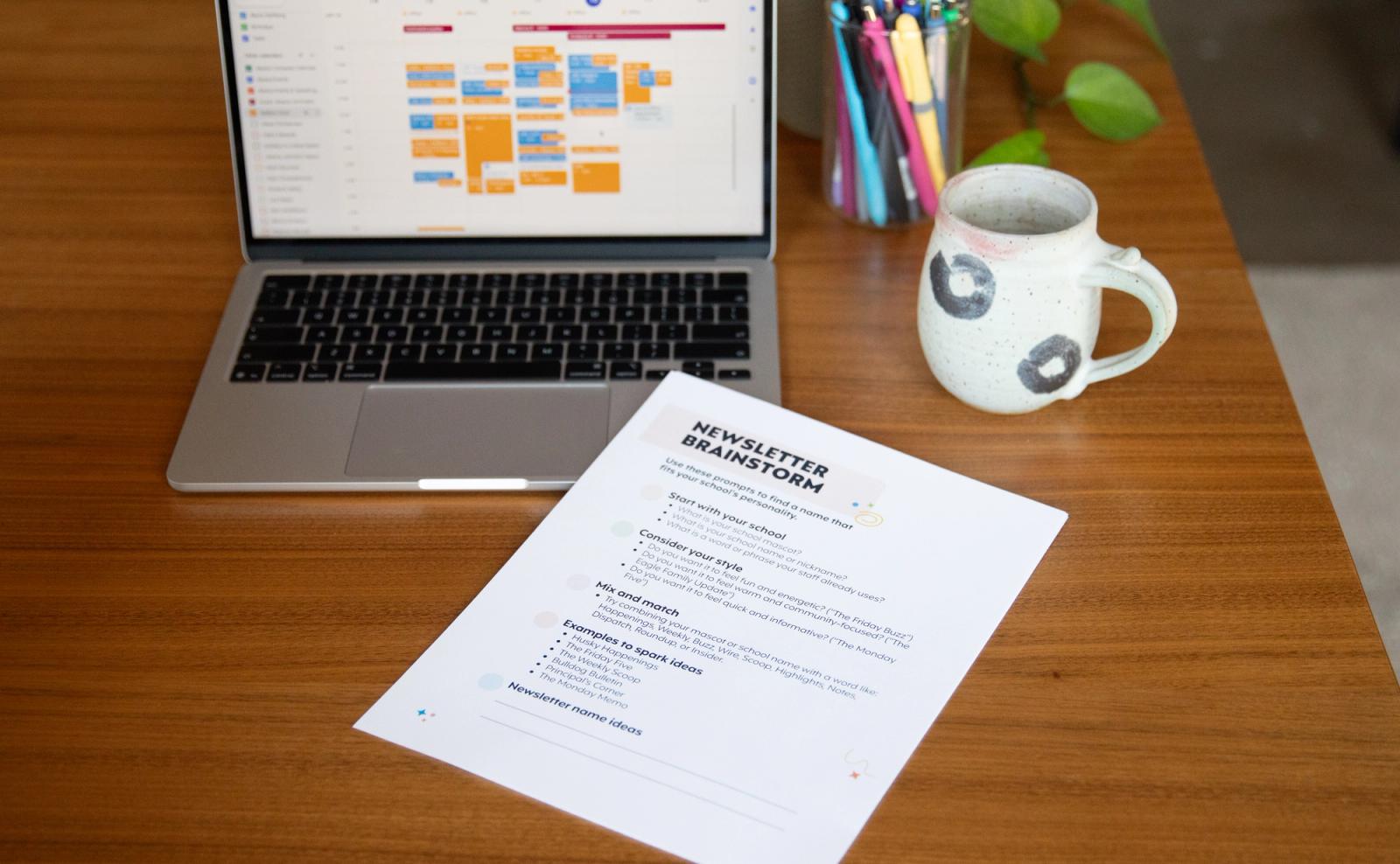
Create a title for your newsletter that reflects your school's personality. Use your mascot, school name, or a phrase that fits your culture. Something like "Husky Happenings" or "The Friday Five" is more memorable than "Weekly Update." Include the date or week number so each issue feels current.
Keep it short
Limit your newsletter to 10–12 items per week. Staff are busy, and a focused update is more likely to be read than a long one. Use the same layout each week so staff know exactly where to find what they need. Add links when more detail is available elsewhere.
Send it on the same day every week
Pick a day and stick to it. A predictable send schedule helps staff know when to check their inbox and builds the newsletter into their weekly routine. Aim to send before the weekend so staff can plan ahead. Set a calendar reminder to help you stay on track.
Spotlight celebrations
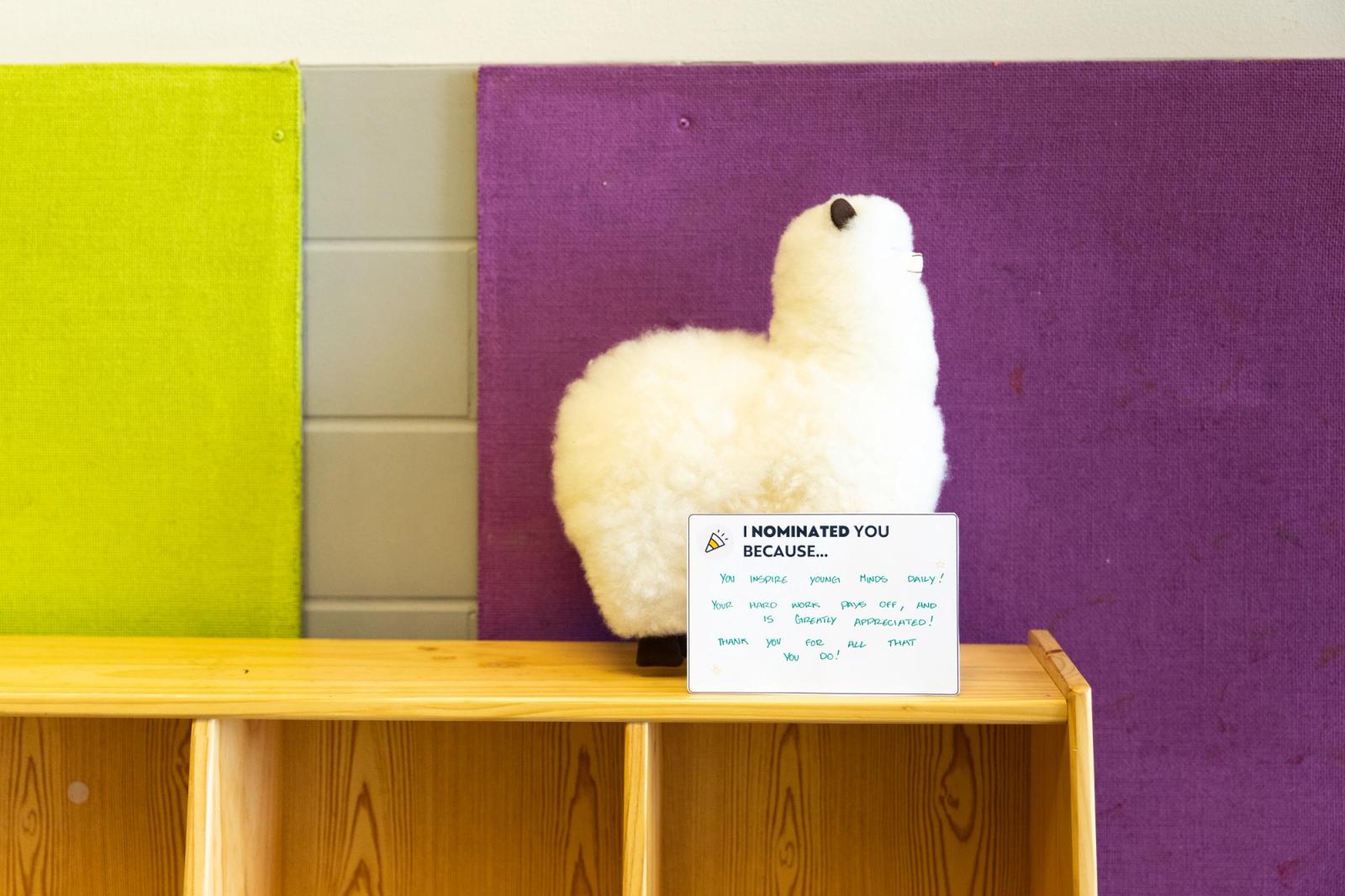
Reserve space each week for staff and student wins. Recognize big accomplishments and small ones. Encourage nominations from staff so you're not the only one sourcing good news. A photo goes a long way here.
Feature a team value
Weave in one of your school's team values each week. Share a quick example of how someone is living it out, or add a reflection question to get staff thinking. Connecting the newsletter to your values keeps them alive beyond the posters on the wall.
Outline the week ahead
Include a simple calendar snapshot with key dates, meetings, deadlines, and schedule changes. This is one of the most-used sections of any staff newsletter. Link out to agendas or sign-up forms when helpful.
Close with something fun
End with a joke, a fun fact, a meme, or a funny student quote. It gives staff something to smile at and makes the newsletter feel human. Invite staff to submit their own. Tie it to the season or a current school moment when you can.
Activity variations
Adapt to fit your school's vibe, budget, and setting.
Shared ownership
Invite a staff member, instructional coach, or committee to co-write the newsletter with you. It lightens your load and brings in fresh perspectives.
Busy season spotlight
During high-stress stretches like conferences, testing windows, or report card season, add a short wellbeing tip or a note of encouragement from you. A few sentences from a leader can go a long way when the week feels heavy.
Go deeper
Additional tips for running this resource.
Leader Tip #1
Batch your content
Keep a running doc or note throughout the week where you drop ideas, celebrations, and updates as they happen. Newsletter writing is much faster when you're not starting from scratch on Friday morning.
Leader Tip #2
Use a template
Build your layout once in Canva, Google Docs, or Smore and reuse it every week. Consistency saves time and makes the newsletter easier for staff to scan.
Leader Tip #3
Protect your send day
If something comes up, send a shorter version rather than skipping it. Your staff will appreciate the update either way.
Leader Tip #4
Track what lands
Ask staff occasionally what sections they find most useful. A quick two-question poll goes a long way for improving what you send.
Built by Educators, for School Leaders
This resource was created in collaboration with passionate educators and school leaders who believe in the power of intentional connection.
Alissa Christensen
Head of Customer Success
Join 15,000+ school leaders finding their next little win.